Persian Heritage Reimagined Through Monumental Art, Hotel Shabestan, Oman
A collection of large-scale acrylic paintings inspired by the rich artistic traditions of Persia, meticulously recreated from historic miniatures and literary masterpieces. Commissioned for Hotel Shabestan, Oman, these immersive artworks celebrate royal courts, epic battles, cultural ceremonies and timeless narratives, transforming hospitality spaces into galleries of history, craftsmanship and storytelling.
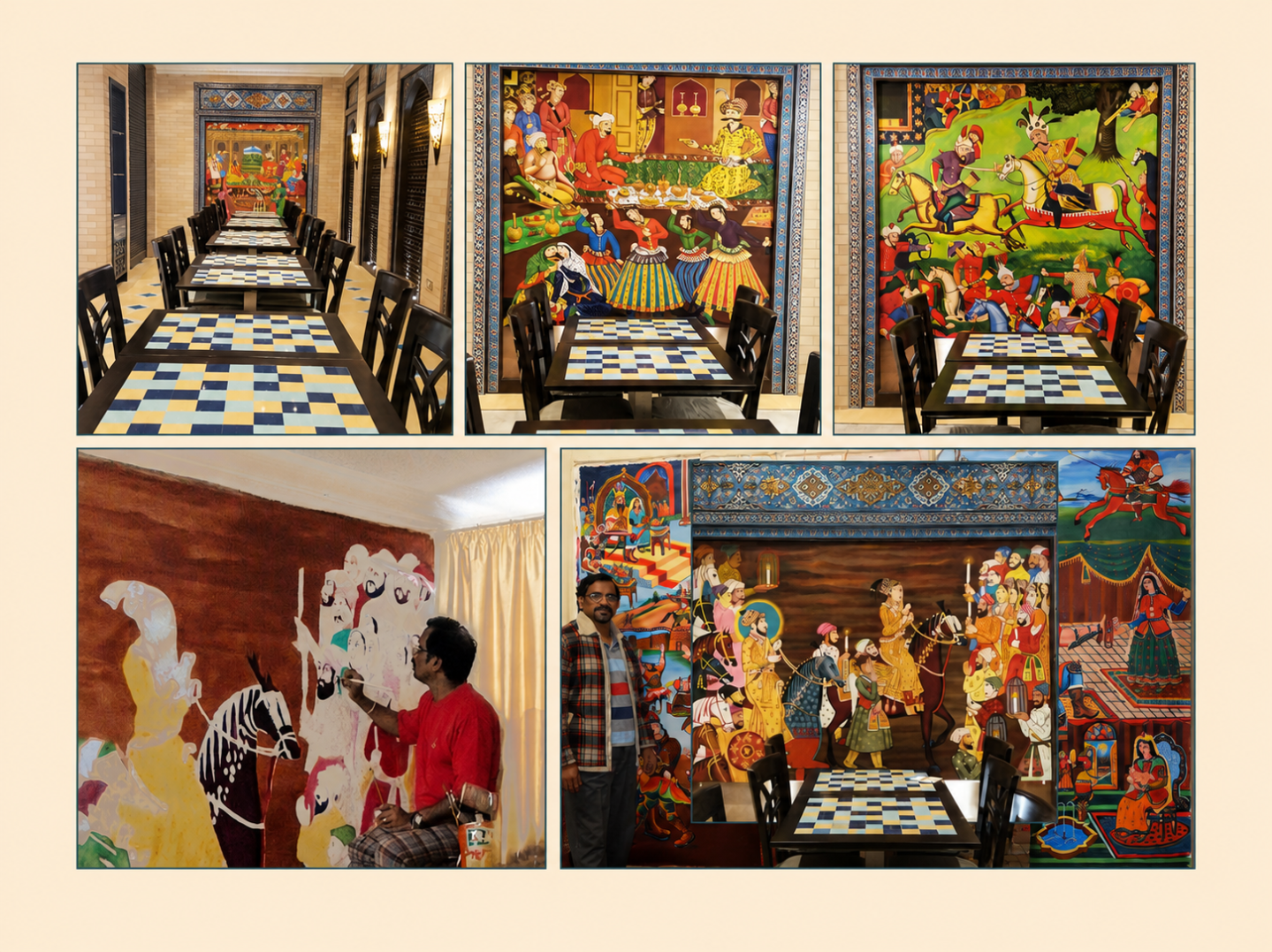
From Canvas to Spotlight: The Journey of Creation at Hotel Shabestan, Oman
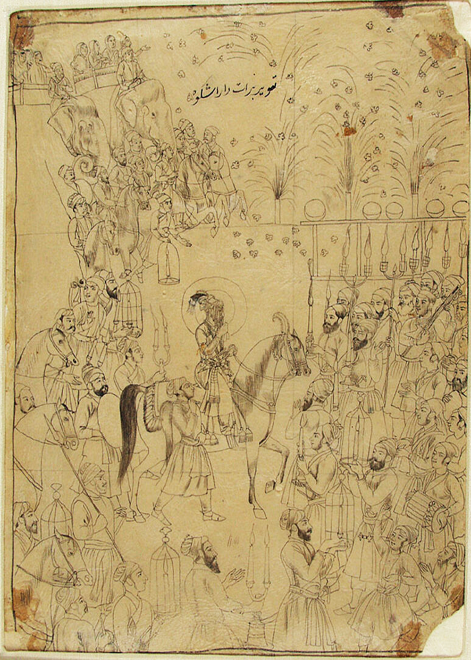
Credit Line of the original sketch Harvard Art Museums/Arthur M. Sackler Museum, Bequest of Hervey E. Wetzel Photo © President and Fellows of Harvard College.
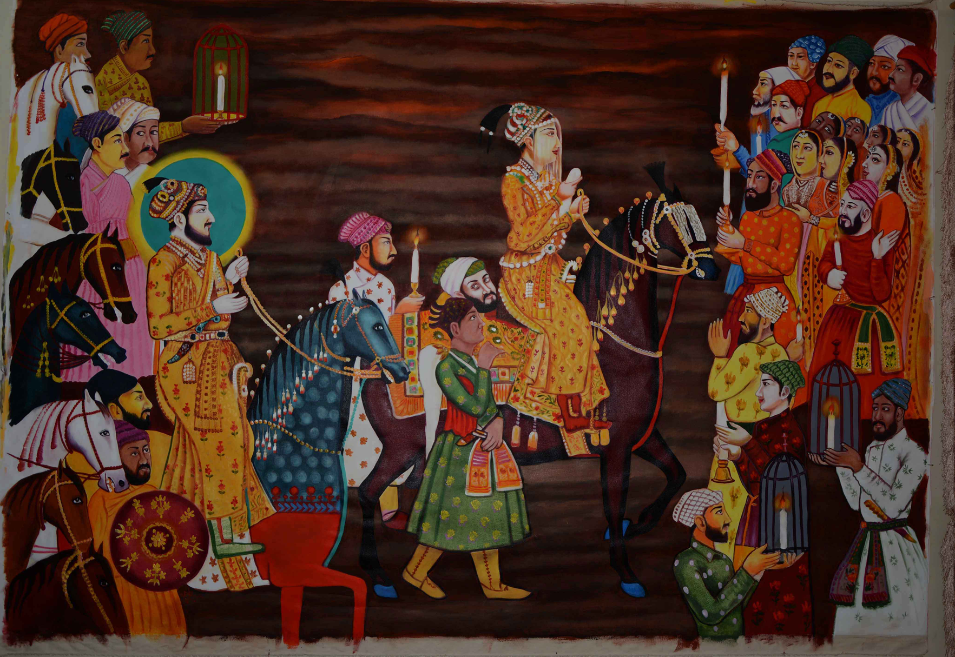
Marriage Procession of Dara Shikoh by Haji Madni, a Mughal provincial artwork in watercolor on paper using tempera technique, depicts Dara Shikoh veiled in pearls, adorned with a plumed turban and a radiant double halo. Mounted on a decorated stallion, he leads a grand procession of men carrying candles, musicians, and armed guards, followed by women in howdahs on elephants. Fireworks illuminate a distant balcony is not included in this replica This unfinished tracing closely resembles a 1740-50 painting in the National Museum, New Delhi, showcasing the opulence of Mughal ceremonial traditions-Sasi Krishnan.
Scaled up replica: Acrylic on canvas-12 feet x9 feet
Scaled up replica: Acrylic on canvas approx. 6 feet × 6 feet
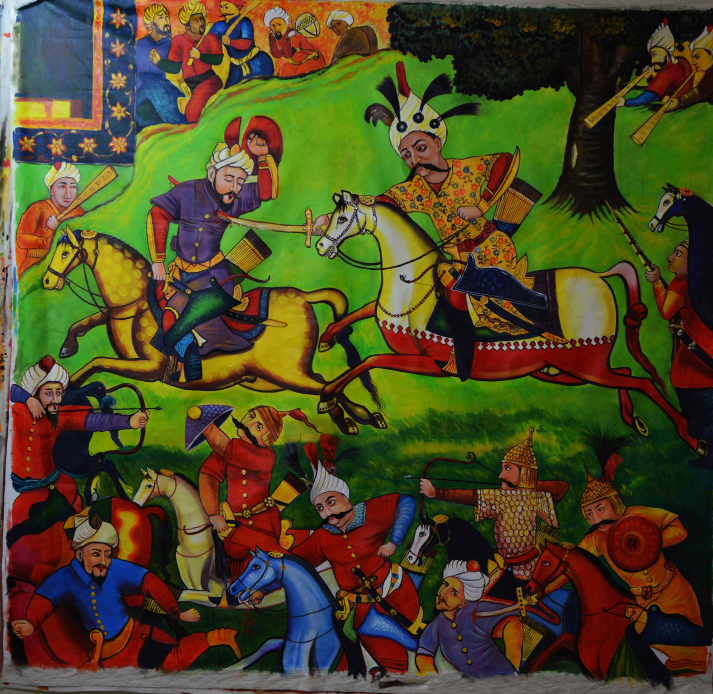
This art work is inspired by the Iranian painting-‘Painting depicting the battle of Marv 1510, Pavilion of the forty columns, Chehe/ Sotoun persian garden The painting depicts the historic clash between the Safavid ruler Shah Ismail I and the Uzbek leader Muhammad Shaybani Khan. This battle marked a decisive victory for the Safavids, consolidating their power in Persia. The artwork, painted in the grand Safavid style, showcases intense combat, dynamic figures, and rich detailing, emphasizing the chaos and heroism of war. Vibrant colors, elaborate costumes, and Persian miniature techniques highlight the grandeur of Safavid art while commemorating this pivotal moment in Persian history. -Sasi Krishnan.
Scaled up replica: Acrylic on canvas approx. 6 feet × 6 feet
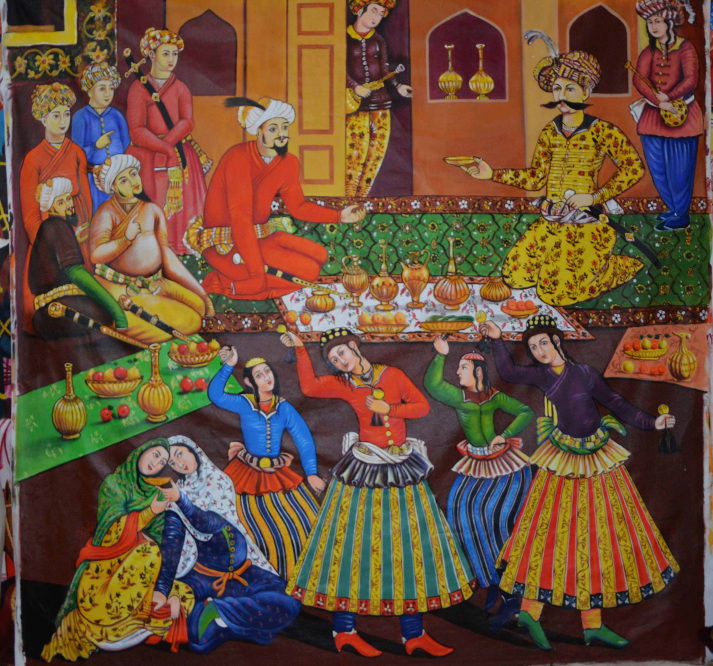
This art work is inspired by the Iranian painting-‘ “Shah Abbas I receives the Uzbek ruler Vali Muhammad Khan” painting on the east wall of the north bay of central audience hall of Chehel Sotoun Palace-The painting “Shah Abbas / Receives the Uzbek Ruler Vali Muhammad Khan” is a significant Safavid-era artwork located on the east wall of the north bay in the central audience hall of Chehel Sotoun Palace in Isfahan. It depicts a diplomatic meeting between Shah Abbas / (r. 1588-1629) and the Uzbek ruler Vali Muhammad Khan, symbolizing Persian dominance and strategic alliances in Central Asia. The scene captures the grandeur of the Safavid court, featuring richly adorned courtiers, elaborate textiles, and meticulous architectural details. The composition reflects Persian miniature traditions, blending realism with decorative elements to emphasize royal power and political diplomacy. -Sasi Krishnan.
Scaled up replica: Acrylic on canvas approx. 6 feet × 6 feet
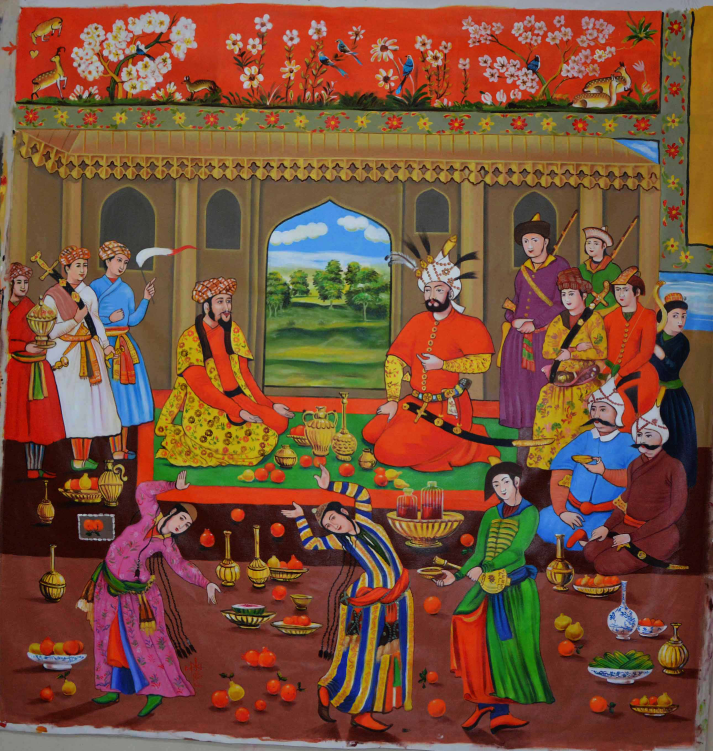
This art work is inspired by the Iranian painting-‘ “Shah Abbas I receives the Uzbek ruler Vali Muhammad Khan” painting on the east wall of the north bay of central audience hall of Chehel Sotoun Palace-The painting “Shah Abbas / Receives the Uzbek Ruler Vali Muhammad Khan” is a significant Safavid-era artwork located on the east wall of the north bay in the central audience hall of Chehel Sotoun Palace in Isfahan. It depicts a diplomatic meeting between Shah Abbas / (r. 1588-1629) and the Uzbek ruler Vali Muhammad Khan, symbolizing Persian dominance and strategic alliances in Central Asia. The scene captures the grandeur of the Safavid court, featuring richly adorned courtiers, elaborate textiles, and meticulous architectural details. The composition reflects Persian miniature traditions, blending realism with decorative elements to emphasize royal power and political diplomacy. -Sasi Krishnan.
Scaled up replica: Acrylic on canvas approx. 8 feet × 9 feet
This art work is inspired by the Iranian painting-‘Painting depicting the battle of Marv 1510, Pavilion of the forty columns, Chehe/ Sotoun persian garden The painting depicts the historic clash between the Safavid ruler Shah Ismail I and the Uzbek leader Muhammad Shaybani Khan. This battle marked a decisive victory for the Safavids, consolidating their power in Persia. The artwork, painted in the grand Safavid style, showcases intense combat, dynamic figures, and rich detailing, emphasizing the chaos and heroism of war. Vibrant colors, elaborate costumes, and Persian miniature techniques highlight the grandeur of Safavid art while commemorating this pivotal moment in Persian history. -Sasi Krishnan.
Scaled up replica: Acrylic on canvas approx. 12 feet × 9 feet
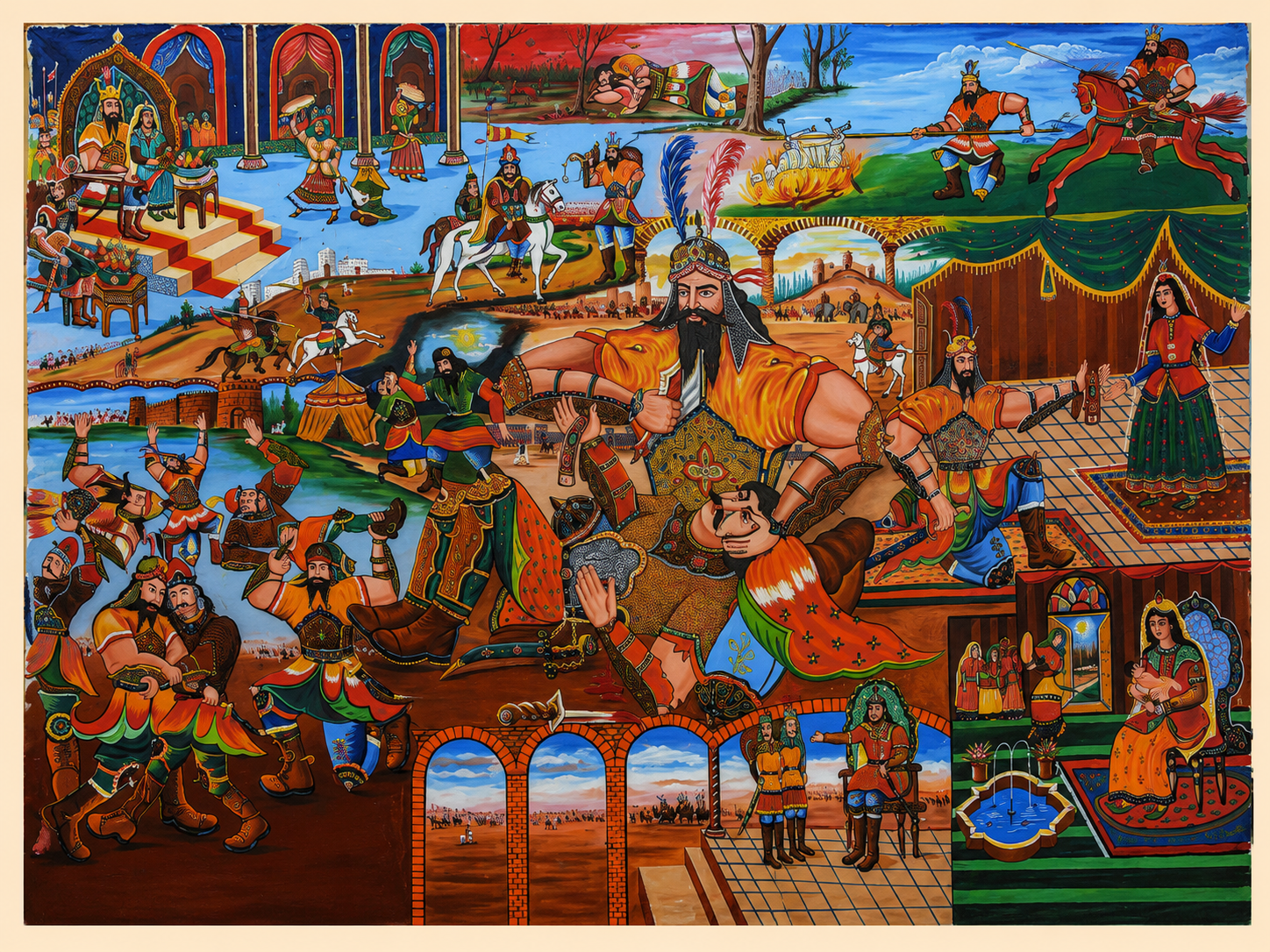
This art work is inspired by the Iranian painting-‘The tragedy of Sohrab and Rostam’ from the Shahnameh is a cornerstone of Persian literature, portraying mythical and historical narratives. Rostam, a legendary hero, unknowingly battles his son, Sohrab, leading to a heartbreaking revelation. Their duel, rich in tragic irony, highlights themes of fate, miscommunication, and familial conflict. The tale’s cultural and literary significance endures through poetry, art, and theater. Symbolizing ambition, pride, and destiny, it continues to inspire diverse artistic interpretations, from paintings and sculptures to performances. A timeless reflection on human nature, Sohrab and Rostam remains an enduring masterpiece of Persian storytelling-Sasi Krishnan.